Showing posts with label painting. Show all posts

Tuesday, 27 August 2013

Grade 10 gallery Visit

Last week we visited the gallery and had a look at the exhibition:  Homosapiens


Below is the information from Mrs Moore's blog

Choose ONE sculpture and ONE painting that you enjoyed,
 and create an infographic on each.


Include:-


  • Information about the work (Title, Artist's name, meduim, size, date)
  • Interpretation of the work
  • Discussion of the materials and technique involved


Evolution
Artist: Elizabeth Balcomb
Medium: Paper clay
Size: 17cm x 17cm x 50cm


PT Barnum, Charles Stratten and Lavinia Warren hosting small miracles
Artist: Sandra Hanekom
Price: R17,250.00
Medium: Oil on acid-free paint board
Size: 565mm x 820mm (framed


Pomegranate, Bottle, and Skull

Artist: Peter Rippon
Year: 2011
Price:  Not For Sale
Medium: Oil on linen canvas
Size: 224 x 370 mm (390 x 535 mm framed)
Perseus
Colour pencil, watercolour, metal leaf and stitching on 300gsm Fabriano Artistico paper
75 x 55cm
2013
R12 800-00
Good link for Christiaan Diedericks  - found by Ayanda
http://www.velvetabsakknk.co.za/artist-christiaan-diedericks.php

Paper clay notes
In addition to making my sculptures lighter, I now have more freedom in my creation process. No longer do I have to worry about the condition of the clay at what ever stage. I like the fact that wet paperclay can be joined to bone dry pieces, even dry to dry joints are not an issue. If a dry piece should break off, it’s a simple matter of sticking it back on with some paperclay slip. Even cracked, bisqued pieces can be repaired and re-fired.

The resulting bisqued piece behaves just like any other clay body so there is no difference in the glazing process.

I’ve used paperclay in high fire, low fire, raku, pit fire and the Kazegama firing without any problems."" http://www.anthonyfoo.com/Paperclay.htm

http://www.grahamhay.com.au/paperclayartists.html
http://www.jerrybennett.net/paperclay.html

Grade 10 Colour Sourcebook


http://mongoose1.wordpress.com/category/duane-keiser/

"It's now time to put your sourcebook together:
[Collection of A3 posters]

  • Cover page
  • Experiments with collage cloud (+ notes)
  • Experiments with watercolours (+ notes)
  • Experiments with Hue; Intensity; Value (+ theory)
  • Experiments with EGGs (+ notes)
  • Investigations of other interesting art work (+ notes)
  • Experiments with acrylics and oils (+ notes)
  • Any drawings for your egg painting
  • Gallery visit - oil painting
  • Final egg painting" Link to the rest of Mrs Moore's Colour Sourcebook post

Monday, 15 July 2013

Grade 10: Acrylic painting

 Create a surreal composition, using an egg.
  
 Thumbnail Sketches & Experiments


link to clip on transposing thumbnails into final sketches


Paint in the cool dark colours first, then add warm colours and lastly some blending with oils.


Monochrome under-painting


We will start our surreal egg paintings by creating  illusions of form and space using one dark colour and white. (A monochrome) This is a very old traditional technique used by Vermeer.


However, we will use acrylics for our monochrome because it dries faster. Mix your own dark - try and avoid using black. Remember to work into both figure and ground.

We will work over the monochrome (the 'grisaille') with  local (representational) colours.

 Lastly, we will use oil paints to blend and adjust the colours and tones.


Link to a tutorial

#2- Continuing monochrome acrylic underpainting #4 - oil painting cont. B&W photo to check values of finished painting
this artist takes a black and white photo to check her values at the end of her painting, read more by clicking on her blog below.
http://janabouc.wordpress.com/2008/12/08/pile-o-persimmons/


http://artid.com/members/eleanormcintosh/blog/post/4392-oil-painting-using-an-underpainting

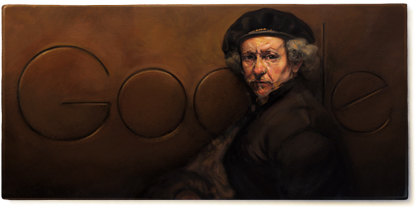
Rembrandt van Rijn's 407th birthday
it's Rembrandt's 407th birthday today.

Some Painting revision clips:

colour mixing

painting posts

packing tape transfers

Wednesday, 22 May 2013

Grade 10 Colour Poster (Due 27 May 2013)


Grade 10s so far you have completed the following activities for your poster in class,


  • a colour wheel in pencil crayon or magazine images + a colour 'cloud'
  • swatches of watercolours matched to magazine strips in your cloud
  • chromatic greys 
  • notes on how you mixed certain colours
  • a graded wash
You are currently working on:
  •  a watercolour painting based on Mrs Moore's photograph ( you can add details using black ink or pencil crayon) also make sure you use chromatic greys for the background
  • taking your own photograph for your own composition
  • Creating your own watercolour painting

Chromatic Greys
What are they?
[Define them and explain how to make them]
Make the following:
(Name them with their ‘common’ names!)
1.Light warm grey  - 2 different types
2.Cool dark grey - 2 different types
3.Mid cool grey - 2 different types
4.Light cool grey - 2 different types


link to an animation on the colour wheel

Tuesday, 21 May 2013

Grade 10 Watercolor egg project


Two exquisite egg paintings by Shirley Royal, a family friend of mine.


Posts From Mrs Moore's blog:

Egg photo

Beautiful egg 'landscape'  by Grade 10 learners. (Tayla & Taylin?) Look at some of Dali's landscapes to appreciate how 'surreal' this photo already is.


Egg project

For my Grade 10s .....

Try this composition of mine in watercolours. 
Look at your collage and watercolour 'cloud' for paint guidance.


Now try your own photoshoot.....

Use the photographic references you have taken.
Start the painting by drawing in soft, light pencil. Remove the excess graphite.
Do the under-painting with watercolour washes – work over the wholepage with the lightest value colours. Pat out some whites.
Let dry.

When dry, add darker transparent washes over some of the under-painting to add illusions of form. Hard edge = no wet paper; blurry blended edges = on dampened  paper.
Repeat as necessary………

Scan to document the painting as it grows.

Lastly,  work over the painting with pen & ink.

Monday, 20 August 2012

Stunning painting


Jeannie Kinsler describes her new body of work as an exploration of the human form fragmented by light and shadow e KZNSA on Tuesday 21 August....t

Thursday, 7 June 2012

Wednesday, 30 May 2012

Grade 10 Acrylics

Please check that you have:

  • Cut your board to size and that your edages are striaght (use the green cutting boards to check)
  • Paint your boards white (at least two layers)
  • paint a cross on the back to prevent it from bending
  • put your name on on your board
  • once your board is DRY sand it lightly
  • and use a cloth to apply a blue grey wash (mix blue with black/burnt umber)
  • download and print your picture
  • make sure you edit your photo on photoshop and change the image size to the same size as your board
  • sketch your composition lightly in pencil.
  • begin painting
NB: you also need to create a poster on acrylics (focuing how to mix acrylic colours as well as creating an illlusion of form using colour)

Tuesday, 8 May 2012

Grade 10 colour/ watercolour posters


create 1 or 2 A3 posters on:

  • The Colourwheel
  • Mixing chromatic greys
  • Mixing tertiary colours
  • Hue, Value and Intensity 
  • various magazine and paint examples
  • How to use watercolours (washes, capillary action of the water, brushes)
  • include examples of painting monochrome eggs as well as
  • colour eggs

link to free online watercolour tutorials (brush strokes/ methods of applying paint)

link to how to paint apples

link to powerpoint on watercolour painting and colour theory

Monday, 30 January 2012

some more interesting artists for my matrics

Bronwen-Vaughan Evans
http://www.artthrob.co.za/04may/listings_kzn.html#nsa2
'One Zero One' by Bronwen Vaughan-Evans at the NSA Mezzanine Gallery
Bronwen Vaughan-Evans will be presenting an exhibition of detailed small works (each measuring 13cm X 13cm) making up large-scale composite pieces. Each panel is intensely detailed and laboured and each has an iconic feel, incorporating everyday images from the artists` environment and life history. They are also, to an extent, an investigation into the nature of nationality and identity as well as reference to childhood memories, which are often visual rather than verbal.Some of the works are historical, and contain images from junior school textbooks; others make reference to nursery rhymes or resemble pop-art depictions of common South African products. Many of the works include found objects which range from small plastic toys to old badges and emblems that reflect fragments of our past.
Vaughan-Evans' subject matter is chosen almost at random, like a flow of thought in which no single image is more or less significant than any other. Through this, the works acquire the shifting qualities of small flashes of memory and dream.
The title of the exhibition 'One Zero One', refers primarily to the number of small works that make up the composite piece, but also makes reference to binary systems. Each work, like the zeros and the ones that make up the binary code, has an alternating level of significance that is dependant on its position relative to the other works. It is only when the individual digits of binary are grouped together that fluctuating patterns begin to emerge and acquire meaning.
Vaughan-Evans received her Masters of Arts in Fine Art in 1995 from the University of Natal. She has lectured there part time and is also a qualified art teacher. She is currently a full-time artist, and was last year seen on the Brett Kebble Art Awards show in Cape Town. This is her first solo exhibition.
Opens: May 25 at 6pm
Closes: June 13