Showing posts with label grade 9. Show all posts

Monday, 13 January 2014

Grade 9 2014

Welcome to Studio 2-41.


This term we will be discussing perceptions of beauty within various cultures and how this influences artists...click on the links below to view the powerpoints we have been working on during class.


link to powerpoint on how we perceive beauty

Link to Historical Beauty Practical collage project

Link to Mrs Moore's blog

Thursday, 7 November 2013

Illusions of space: Infographic Report Back

Presentation notes:
- when creating an infographic the title is the topic not the word infographic (e.g ILLUSIONS OF SPACE)
- also it is an interactive learning tool, so it is good idea to use arrows and diagrams to interact with the contents of the image as well provide links between the text and image

Illusions of Space Definition Notes:
Some learners were confused about linear perspective and just wrote that there are three types of linear perspective (1 point, 2 point and 3 point), and lines to show depth.  However you must explain that linear perspective creates an illusion of space by showing the angle at which lines recede into the distance. It is based on the fact that parallel lines converge (join) at a vanishing point on the horizon.

 or one could say that

Linear perspective is used by the artist in which the relative size, shape and position of the objects are determined by drawn lines converging at a point on the horizon.

Link to informative presentation on illusions of space


Also scale/ size is to do with the fact that objects that are closer to the viewer are larger and objects that are further away are smaller.  It is not just based on a comparison of objects for example the squares create an illusion of space as they become smaller as they recede into the background, but the image comparing the scale of a human to various animals does not show an illusion of space as all the animals are on the same plane ( i.e their is the same distance between the smallest animal and the viewer and the largest animal and the viewer).

Application Notes:
 Please note that you must apply knowledge when creating an infographic and cut and paste type information hinders learning. Therefore you had to discuss visual clues (elements and principles of art such as scale, value, colour... and imagery) in your illustrations.

Honda ad based on illusions of space


Monday, 4 November 2013

Grade 9: November Exam Brief


  • Illusions of space
  • How to identify and interpret visual clues in unseen art works  (this is based on the skills you learnt when writing about the Disney Princess and ' oh yes, girl' by Jane Alexander
  • An unseen exercise based on your Picasso worksheet where you learnt how to identify the elements and principles of art (you need colour pencils, or pastels for this)
  • You also be required to create an infographic on an Artist you have studied this year. You will need to know the following information:  
              -why the artist made this work (i.e their intention)
              -how they made the work (i.e materials and techniques)
              -how they have used the elements and principles of art to                  create their composition.

Terminology:
The term visual clue refers to an image, technique or element or principle of art that an artist has used.

Tuesday, 15 October 2013

Grade 9: Illusions of Space Infographic

Grade 9s
Your project is based on creating infographic ( a combination of written information and images) on the techniques artists use to create an illusion of space.  You can take your own photos and include diagrams and sketches.  You can present information as a A3 poster or digitally using google docs, emails, and prezis.


See the link to Mrs Moore's blog for more examples.
http://studio238dghs.blogspot.com/2013/08/illusions-of-space.html

Link to previous posts on Illusions of space

link to a short video on the 6 ways to create an illusion of space

Monday, 14 October 2013

Grade 9 Figure drawing project

Below are the images on your worksheet from Mrs Moore's blog (http://studio238dghs.blogspot.com/2012/11/stereotypes-drawings.html ).  You can also create a figure drawing made up of your own objects.


Mixed Media Artists


Below are Some Links to Various Mixed Media artworks for those of you who enjoy this technique.


For mixed media animation examples click on the links below.  The programs you may use are Adobe Premiere Elements or Windows Live Movie Maker.


Link to Tessa Comrie's magic lantern animation


Link to previous Stop Animation Posts

Link to Mrs Moore's Inside Out animation & Adobe Premiere Post


Elizabeth Sparg see more at the link below:
http://fromtheartstudio.com/portfolio_page/in-the-wild/

And even some inspiration from our matric class, I love how Anna Talbot has cut jagged lines around the boy's form. Her piece really captures a moment in time.


Natalie Wessels

Tharunisa Reddy
Upasana Patel
Link to Mrs Moore's post on the 2013 Matric exhibition


Esdar Maren

See Mrs Moore's post on Esdar-Maren


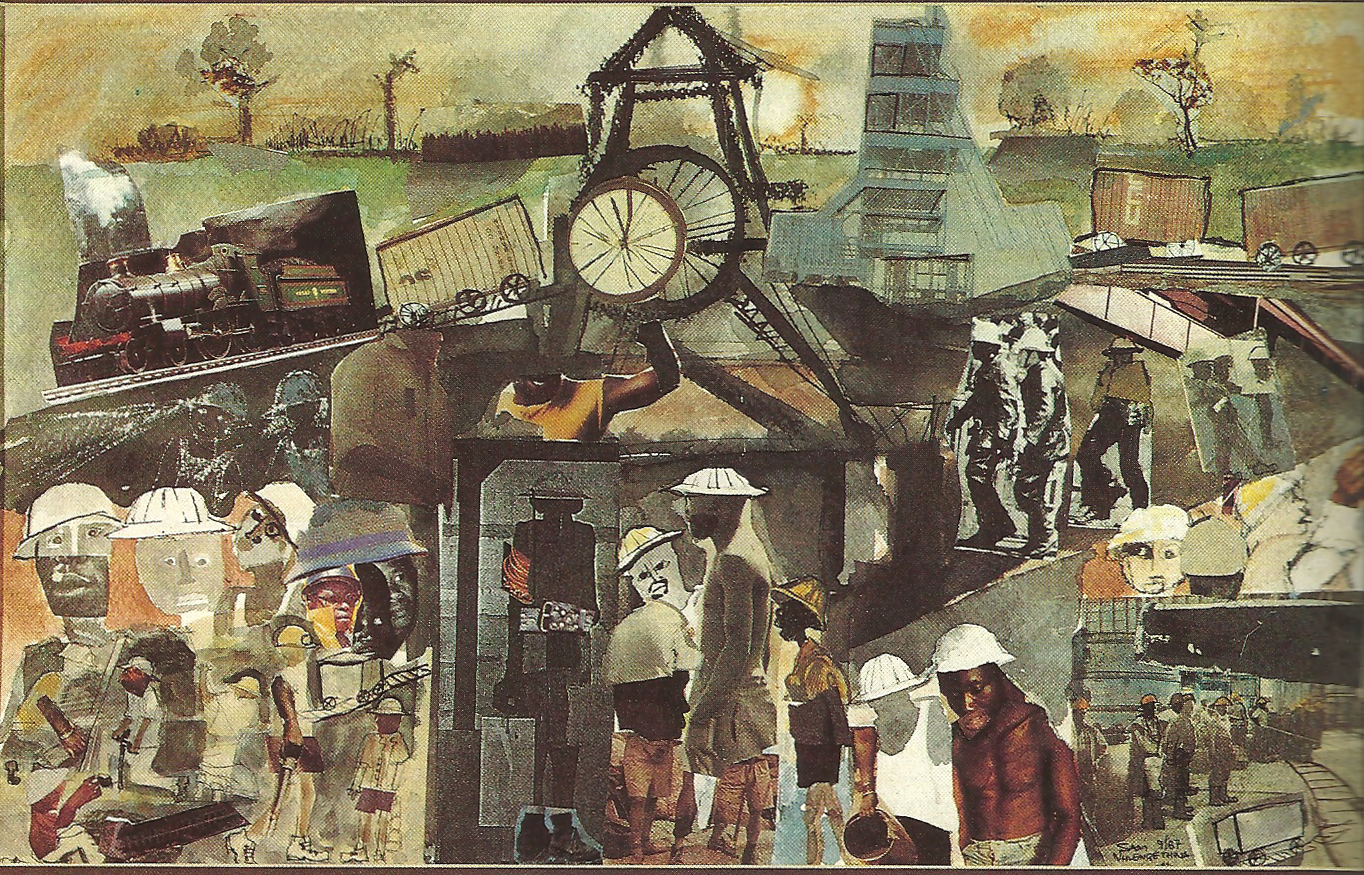
Sam Nhlengethwa

Read Sam Nhlengethwa's artists bio by clicking on the link below:
http://www.artthrob.co.za/03oct/artbio.html

shaft
Shaft, 1987 by Sam Nhlengethwa  image from : http://paxlupo.com/2010/12/23/reeducation-unreconstructed/


Frolic 1
image from: http://www.kznsagallery.co.za/exhibitionimages/showtime_new_works_by_amy_jo_windt.htm

Link to Mrs Moore's post about Christiaan Diederick's Perseus

Christiaan Diedericks 2013
Colour pencil, watercolour, metal leaf and stitching on 300gsm Fabriano Artistico paper 
75 x 55cm


Tuesday, 27 August 2013

Grade 9: Printmaking Terminology


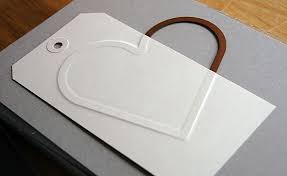
Embossing images

An embossing to decorate with or as if a raised design.  To create an embossing place a piece of damp card over your texture/ collagraph and apply pressure by rolling through the printing press.

An intaglio process in printmaking, using etching or scratching into perspex. This is then inked and excess ink is rubbed away with a damp cloth. The printed image is from the ink that remains in the valleys of the scratched image.  The Grade 9's did this using laminated cardboard instead of perspex/ metal.


Lino printing is when you carve into vinyl or lino and the ink prints of the high places. Collagraphs are created by pasting textures on to a piece of card and inking up and printing from the raised textural areas.  Lino printing and collagraphs are examples of relief printing.

When you ink up and print from your collagraph, your first print may be too dark.  To fix this start a series of ghost prints. This means that you will reprint the collagraph on a new piece of card without a new layer of ink.
Collagraph example

 top left: 1st print, bottom left: 1st ghost print


Tuesday, 13 August 2013

Grade 9: Artist Alert: Diane Victor


Diane Victor: Weighing and Wanting


"Is it too much to ask that women be spared the daily struggle for superhuman beauty in order to offer it to the caresses of a sub-humanly ugly mate?" - Germaine Greer, Academician... read more on Diane Victor by clicking on the link below:

http://afhsouthafrica.blogspot.com/2011/08/weighing-and-wantingthe-private.html
link to Art for humanity site

See if you can analyse this print based on the following questions:

1. What type of beauty does this piece discuss? (refer to visual clues to support your answer)  [2]

2. How does the women feel? (refer to visual clues to support your answer) [3]

3. Who is putting pressure on (i.e controlling) the women to conform to this type of beauty? (refer to visual clues to support your answer) [2]

4. How do the dark tones in the background of the image make you feel? [1]

5. What products does the women use to make herself feel beautiful?(refer to visual clues to support your answer)  [2]

6. Research and discuss Diane Victor's etching technique. [2]

7. Try an etching using cardboard click on the link below for tips: http://aquarel.blogspot.com/2007/11/dry-point-prints-and-special-dry-point.html [3]
Total : 18 marks
[12 marks for 1-6 + 3 marks for sentence structure &grammar + 3 marks for practical experiment=18]


http://thevirtualinstructor.com/etching.html -etching explanation & video clip


Gabisile Nkosi: Sisterhood


Tuesday, 16 July 2013

Due Dates Term 3


theory:victorsourcebookfinal prints
9A30-Aug    9A2 sept   9A18-Sep
9B27 aug  9B27-Aug   9B18-Sep
Grade 8'S your sourcebook dates have changed to:

Theory Sourcebook Pendant 

8A 01-Aug 8A  4 sep
8A 19-Sep
8G 30-Jul 8G 3 sep
8G 19-Sep
8N 02-Aug 8N 4 sep
8N 19-Sep
8R 31-Jul 8R 11 sept
8R 17-Sep

Drawings due:

Grade 8A -2 Sept

Grade 8G -27 Aug
grade 11 prac t2 sourcebook
hand in dates 22-Jul info 1 nr  22-Jul
mindmap  26-Jul
experiments  05-Aug
draw   13-Aug
sourcebook  19-Aug
grade 12VA
hand in T2 PAT 3 22-Jul
sourcebook 14-Aug


Tuesday, 28 May 2013

Grade 9s: Exam brief

  • You need to be able to write about beauty and artists you have studied in class (Alexander and Disney and Amy-Jo Windt)
  • You will apply your knowledge of the elements and principles of art to unseen artworks.
  • You need to bring your drawing pencils (4B, 2B, HB) and pencil crayons (especially  Blue, yellow, orange, brown, greens and red)
  • You will also need an eraser and sharpener for your drawing exam.

Tuesday, 21 May 2013

Grade 9: Exercise

Use your worksheet to assist you in identify the elements of art in this image from Mrs Moore's blog.

Record your answers using full sentences and descriptions of the examples found in the image of the Weeping Woman with the Red Hat by Picasso.


Weeping Woman with Red Hat
Picasso


Identify & describe each of these terms in a sentence with colourful adjectives: (TWO of each if possible……?)     

(20 marks content + 5 for style = 25 marks)
This mark is for your CASS year mark, and you will get 'unseen' activities like this in your exams.

1.positive shapes
2.negative shapes
3.geometric shapes
4.organic shapes
5.patterned shapes
6.textured shapes
7.plain shapes
8.high contrast between shapes
9.low contrast between shapes
10.bright shapes
11.dull shapes