Showing posts with label 2014 grade 12 theory. Show all posts

Tuesday, 21 October 2014

12VA: New Media Revision

New Media: Link to Revision PPT


“He got game”, Robin Rhode, 2000 
Image from: http://rebelart.net/watchlist-16-robin-rhode/00154/

Dear Grade 12's your textbook PPt has been updated... Good Luck For Monday!!

Link to Theory Textbook 2014

Remember you are answering Questions 2, 3, 5, 6 & 7 in the final exam. Also study 3 artists for each theme in case on of the unseen examples is an artist  we have studied this year!

Sunday, 19 October 2014

12VA understanding Theme 6 And Wim Botha PPT


 Theme 6 - Post-democratic Identity in South Africa (including issues of language, ethnicity, globalization, urbanization in the new South Africa)

Link to PPT explaining concepts and terminology for Theme 6


Wim Botha, ‘Mieliepap Pieta’, 2004

A life-sized mirrored replica of Michaelangelo’s original modelled in maize meal and epoxy resin.

Image from: http://spierartcollection.com/img/content/articles/artists/4/Mieliepap-Pieta-(2004)-by-Wim-Botha.jpg 

Link to PPT on Wim Botha


The Levin Institute (The State University of New York), points out that "although there is no consensus on the consequences of globalization on national cultures, many people believe that a people’s exposure to foreign culture can undermine their own cultural identity."

Link to ijusi exhibition KZNSA blogpost

Wednesday, 6 August 2014

Essay Writing & Exam Revision: 12VA

Link to Memo from June Exam 2014

When writing an art essay make sure you structure your work to add clarity and focus to your discussion.  Below is a brief layout that will help you with writing concisely.

Introduction: Data & Intention

E.g.
  • Sentence 1 = An artist who deals with (theme) is ( artist's name) in the artwork  (title of the work).
  • Sentence 2= (artist's name) intention is to (briefly explain intention)


Body= Analysis of Visual clues

Visual clues are: Formal elements and principles of art [EP], materials and techniques [MT], imagery [I]


  • Sentence 1: The artist has used (specific description of the visual clue) to express (meaning of the visual clue).
When describing a visual clue you need to explain the category (is it a EP/MT/I) as well as a brief description of what it looks like. However to get your mark you need to explain the meaning or symbolism of the visual clue. Thus analyzing visual clues is like describing two sides of a coin.

 = 
Images from: http://www.coinnews.net/2008/07/07/nelson-mandela-madiba-birthday-coin-from-south-african-mint-4239/  & http://en.wikipedia.org/wiki/Mark_(currency)

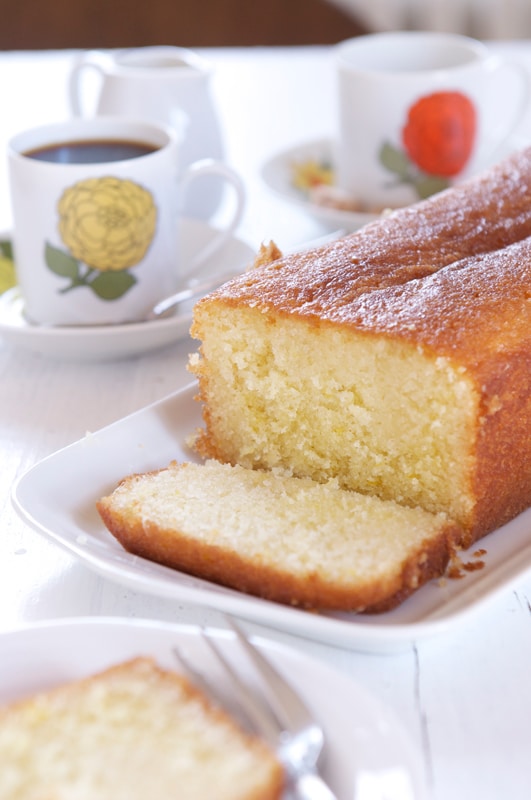
I like to think of an analysis like identifying the ingredients used to bake a cake (i.e. the artwork) as well as the occasion that the cake was made for (i.e. the meaning of the artwork).

 
Images from: http://eatlittlebird.com/2012/08/08/lemon-syrup-loaf-cake/ 

Conclusion= Wow factor

When you have finished your analysis you need to sum up your essay with a sentence that demonstrates your insight into the topic.  It is like the ribbon that holds everything together and rounds your essay/cake off.


Please note if you are writing an essay on more than artist than after your conclusion of the first artwork analysis you will have a JOINING WORD that begins the next analysis e.g.

SIMILARLY/ ANOTHER ARTIST THAT explores this theme is.. (artist name)...discusses (artist intention/theme) in (artwork title)

Thursday, 24 April 2014

Murray: Art and Politics Grade 12 Examples From 2013 Exams


This metal cut-out by Brett Murray hangs on the wall in the Durban Art Gallery , where it has caused much controversy.
FACT FILE:
The artist does the original drawing.
The digital design is read and cut by an automated laser-cutting machine.
Black is metal, white is the wall – a void.
The text reads:
YOU WOULDN’T UNDERSTAND IT’S A BLACK THING
YOU WOULDN’T UNDERSTAND IT’S A WHITE THING


2.1.1
What is your opinion about the role of digital / electronic media in today’s media world?                                              
Could be pro or con – give reasons    Ã¾ þ   (2)
2.1.2
What elements and principles of art does the artist use? Explain how he uses them.
Eg Line (outlines become solid shapes) eg Positive & negative shapes (solids & voids – discuss) þ þ
  (2)
           
2.1.3
What message do you think the artist is trying to convey?
Does he manage to do this effectively?  Why?  (3)
Clash between B & W cultures. Colonial explorer versus the ‘primitive’ cannibal.
 Uses a 
humorous medium – cartoons.
Accept any reasoned answer.

Johannes Phokela: Art and Politics Grade 12 2013 Examples


 Johannes Phokela
Land of Cockaigne, 2000

Cockaigne is an imaginary place of extreme luxury and ease where physical comforts and pleasures are always immediately at hand and where the harshness of life does not exist”

Below are the exam questions you discussed on this piece

3.1
How does Johannes Phokela’s painting Land of Cockaigne, 2000, use humour to comment on the politicians of today?   Think of  both verbal and visual humour.  (2)
 
Exaggerates human figures to resemble the pig.
Play on the word ‘cocaine’.
Land of milk and honey (from the statues breasts)
Slice of ‘bacon’ from the pig – uses verbal puns a lot.
BUT .. The land looks barren!

 
3.2
Analyse the painting (i.e. discuss the elements and principles used) to show its power as a social/political commentary.  (4)
Renaissance type of landscape with illusions of form and space.

Strong colour in the background – gives a poster effect. 

3.3
The composition plays an important part  in establishing the clarity of the message. Discuss how Phokela has managed this.
  (4)

Composition – central FA – very formal. Diagonal implied lines point towards the fountain.

Political Poster Examples and Brett Murray Influences

Link to an Informative Article on Politics

Hope

http://www.imaginemag.co.za/09OctNov_Artic1.


End Conscription Campaign, printed this poster against sending troops into the townships, in 1985. The ECC worked closely with the UDF. Silkscreen. Source: South African History Archive Collection

Image from: http://www.sahistory.org.za/organisations/end-conscription-campaign-ecc


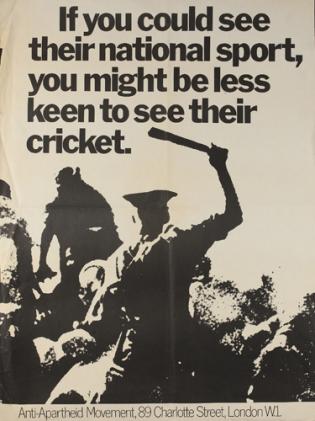
http://revolutionaryfrontlines.wordpress.com/2012/10/20/the-campaign-to-boycott-apartheids-sports-teams-then-south-african-and-now-israeli/

Wednesday, 26 March 2014

Grade 12 2014 Term 1 Test Feedback: African South Artists Inspired by African Art Forms

Grade 12 2014 Term 1 Test Feedback: African South Artists Inspired by African Art Forms


 Sleeping by Andries Botha 1985

Question 1.1 required you to identify and explain the meaning of various elements and principles in Andries Botha’s sculpture.  To score full marks you needed to explain what the various elements and principles in the artwork could mean.

For example: The vertical lines of the wattle create the mood of a cage or raised platform. The height of the sticks creates a sense of the figure being important or that the figure is afraid and sleeps on a raised platform to protect oneself. The golden colour of the figure could represent a sunset or royalty and Botha’s use of natural browns creates a sense that the figure is one with the environment.  The concept of a sunset could link to the ending of one’s life and how the title sleeping could represent death.  The texture of the grass looks smooth and soft and reinforces the idea of a soft mattress or the softness of a relaxed figure. The  form of the sculpture is based on Botha’s body proportions, thus one gets the sense that the figure is alive/human and one could have a conversation with the figure as it exists in actual space. Triangular shape extending from the figure could represent the rise and fall of one’s breath or a protective covering placed over the form. 

Question 1.2:
You needed to identify various visual clues that created different emotions for the viewers.

For example, the natural colours and lightness of the grass creates a sense of peacefulness and calm.  The horizontal lines emphasis the sense of peace and rest, yet the contrast of the dark wattle poles creates a sense of tension and anxiety, as they could represent a cage or prison.  The Figure is on a raised platform and this reminds us of how various cultures honour the dead by placing them on platforms and covering them in a mummy type shroud.  The use of grass and sticks could represent how cultures light bodies and this creates a mood of mourning and sadness.  The golden colour could also represent celebrating someone’s life.  Botha has used traditional South African techniques and materials and this creates a sense of pride in one’s country.

Please note a sculpture is an art object and a basket is applied art or a functional craft object.  Therefore Botha is the sculptor and we asked you to write about his Sleeping sculpture.  The picture of Reuben Ndwandwe was a clue on which local techniques inspired Botha.


Wednesday, 19 March 2014

Grade 12 Test Links: South African Artists Influenced by African Art Forms


Dear Grade 12’s
Your test is on one unseen for 10 marks and an essay on 2 seen artworks that relate to the theme South African artists influenced by African Art forms.

See the links below for information on the artists we have studied:
(NB NO COPYING AND PASTING from the Powerpoints! Your work will be penalized if it is not in your own words!!)
  •  Makhanya: 


Good Luck for tommorrow.

Kind Regards Mrs Sturgess